
Learn · Neonatal resuscitation
Low heart rate in a newborn? Fix ventilation first
When a newborn's heart rate is low during resuscitation, the first thing to fix is ventilation. Chest compressions come only after effective ventilation has been attempted.
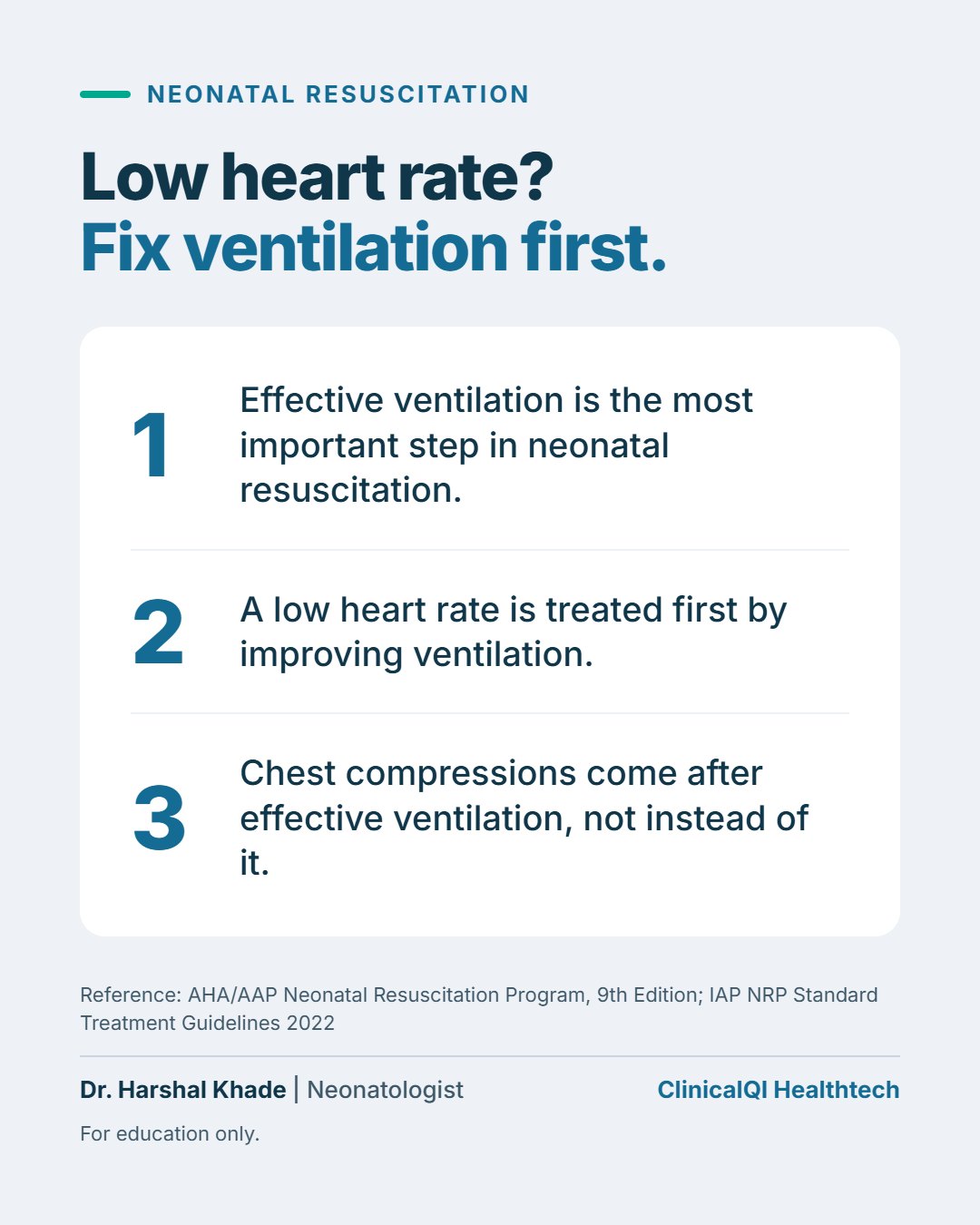
A newborn's heart rate is low. What is the first thing to fix?
Under stress, it is tempting to reach for chest compressions. The guidelines point somewhere else first.
What the guidelines say
- Effective ventilation is the single most important step in neonatal resuscitation.
- A low heart rate is first treated by establishing and optimising ventilation.
- Chest compressions come after effective ventilation has been attempted, not instead of it.
Most babies who do not respond need better ventilation, not compressions.
A question for your unit
In your unit, what most often gets in the way of effective ventilation in the first minute?
Join the discussion on LinkedInFor education only. Follow your institutional protocol and current NRP guidelines.
References
- American Heart Association and American Academy of Pediatrics. Neonatal Resuscitation Program (NRP), 9th Edition.
- Indian Academy of Pediatrics. Neonatal Resuscitation Program (NRP) Standard Treatment Guidelines, 2022.

Dr. Harshal Khade is a neonatologist in Nagpur, India, with over nine years of clinical experience across neonatal intensive care, tele-ICU and paediatric practice, and the founder of ClinicalQI Healthtech LLP.